Posts

Showing posts with the label archaeology

Echoes of Memory

Image
More than a decade ago, in 2013, I participated in my first archaeological excavation. I had just appeared for my third year degree exams and was looking forward to joining a masters’ program the following academic year. It was the first time that I traveled by a ‘laal dabba’, the red local MSRTC bus. It was almost occupied by the time I managed to hop in so I sat on the seat beside the driver (what a thrill - if you know about their infamous driving!). It was an overnight journey from Mumbai Central to Mangaon, Raigad. My excitement was at its peak - finally getting to experience the archaeology life after studying the certificate course for a year! The destination was Chandore - a small village located near Mangaon in Raigad district. Archaeological investigations at this site uncovered remains of an Early Medieval-Medieval temple complex (plinths and plans) and a rock-cut step tank/ reservoir dating back to the Shilahara and the Bahamani rule in Maharashtra. You can read more about ...

Guest Article - Indian Mythology Series: Mohini Avatar of Lord Vishnu

Image
Indian mythology is filled with complex characters who are set in designated patterns and narratives. They are all assigned spaces and purposes – to impart a lesson. It is shed either in a positive or negative light. In the Hindu pantheon, it is a common feature for any deity/ divine being to have the ability to shape-shift. Changing forms or avatāras give rise to other beings which are present for a different purpose. This gives rise to more stories and they end up being cultic figures on their own or enhancing the cult of their primary form. One such deity is Vishnu who, apart from being a part of the Trinity is known to have many forms. One of them is a beautiful woman called Mohini. She has been mentioned in a few Puranas like Vishnu Purana, Kūrma Purana, Agni Purana, the Ramayana, and the Mahabharata. Albeit small, she finds a rather important place in Hindu mythos.  Legends and stories Mohini is first introduced in the story of the churning of the ocean. The devas and the asu...

Textiles: Block Prints of India

Image
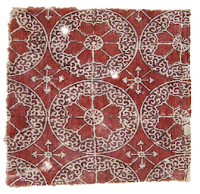
The legacy of textiles in India can be traced back thousands of years ago, in the times when the Harappan civilization flourished in the Indus Valley. The very popular bust of the Priest-King where a male figure is portrayed donning a robe on his left shoulder with drilled trefoil pattern is an excellent indicator of the well-developed textile craft in the region. Evidence of cotton fiber, tools used in the process of weaving, excavated structures recognized as possible dyeing workshops, remains of indigo seeds and a solitary fragment of madder dyed cotton are all the proofs of an advanced textile manufacturing knowledge prevalent among the Harappans. One such textile tradition, known as Hand Block printing, possibly (although not conclusively proven) found its roots in this very civilization. Hand block printing or block printing is a technique where wooden blocks are pressed and stamped on the fabric to get desired prints. However, to obtain such finesse, an elaborate procedure is fo...

Archaeology Vs Palaeontology: Know the difference!

When I get asked about what I do for a living, I say that I am an archaeologist. It is then often followed by questions like, "so you dig dinosaurs?!", "How many dinosaurs have you found yet?" and other questions related to "dinos" basically! Social media is largely responsible for the spread of information which is many-a-times full of ambiguity and errors. So here’s a basic write-up to help you understand how archaeology and palaeontology are different fields of study.  Let’s look at archaeology first. A famous anthropologist Leslie White once said, culture is “man’s extrasomatic means of adaptation”. And archaeology is the study of past human cultures. Extrasomatic means anything that exists outside of the individual human body. Archaeology encompasses everything created by past humans as a means to adapt to their surroundings and advance as a species. The different types of objects produced by past humans are called artefacts. These are made by shaping...

Bead ornaments in the archaeological record

Image
They say “A Diamond is Forever''. But is it really the case? Well, diamonds have not exactly been around ‘forever’ in the jewellery market, until De Beers Consolidated Mines, Ltd. used the slogan to channel the consumer demands by marketing diamonds as being the symbol of eternal love. So then what exactly was the ornament type preferred by our good ol’ prehistoric folks? Before metal was discovered, the prehistoric humans used to fashion necklaces, earrings and other ornaments out of raw materials such as semi-precious stones, mollusc shells, animal teeth, eggshells, presumably flowers and bird feathers as well. Few or most of these materials were usually available in their vicinity. If you have read the earlier article I wrote about shells , then you probably know that they were frequently used to craft ornaments. But what I found surprising while researching for this article is that shell beads might have links with development of language in humans! Mind boggling right? Mar...

The Story of Odisha’s Maritime Trade

Image
When one thinks about the maritime trade of ancient India, the first ports that come to mind are usually Lothal, Bharuch, Bassein, Muziris, Pattanam, etc. Today let’s explore the lesser-known tales of the ports of Odisha from the eastern coastline, and their role in shaping India’s maritime past. Due to poor preservation conditions, the earliest reported shipwrecks from the Indian coastline all date post 16 th century CE (Common Era). In the absence of direct evidence, indirect sources inform us about Odisha’s contacts with the Southeast Asian and Roman regions. These sources are often in the form of literary texts, inscriptions, coins, pottery and iconographic evidence. In the historical sources, Odisha has been referred to by various names as Udra Desa, Kalinga, Utkal and Orissa. The significance of Odisha in the maritime trade is observed in the popular literary works such as Raghuvamsa (an epic poem written in 19 cantos), in which Kalidasa refers to the king of Kalinga as ‘ Mahoda...